God, a Father to all

“When his parents saw him, they were astonished, and his mother said to him, “Son, why have you done this to us? Your father and I have been looking for you with great anxiety.”

And he said to them, “Why were you looking for me? Did you not know that I must be in my Father’s house?”

But they did not understand what he said to them.”

Luke 2:48-50 (NAB)

Pilgrims used to go together in a large group, traveling from Nazareth to Jerusalem, to celebrate the festival of Passover each year. For safety in numbers, they traveled in a caravan, and within that crowd was Mary, Joseph and Jesus. It was a three day journey, stopping along the way to replenish their food and water supply.

After Passover, on the way back from Jerusalem, they realized Jesus was missing from the group. They first searched for him among their relatives and friends. When he couldn’t be found, his parents left the others to return to Jerusalem, and search for their son. 

Jesus was twelve years old at the time, the usual age of beginning to transition from boy to man. After celebrating the Passover, something must have stirred him to stay behind, and spend time talking with the elders in the Temple.

It took his parents three days to find him. They trusted in God, but they had to wonder why He would allow their son to go missing in the first place. The gospel account tells us that Mary and Joseph became very anxious while searching for their son for three days. Who wouldn’t?

Some of us may have had an experience of our own, that caused us to agonize or worry for three days, before finding something, someone or receiving some answer. It might have been three days of waiting for the results of a medical test, or for a response from a loved one or an organization. Whatever we are waiting for, three days can feel like eternity. Although our faith is tested and strengthened after every trial, each new problem still brings new worries. 

Mary and Joseph were holy, faithfilled people, but even they, being human, agonized looking for Jesus those three days. Any parent can relate to them, with our concerns for our own children. 

When they finally found Him in the temple, Mary asked,

“Son, why have you done this to us? For a moment, it sounded like they felt abandoned by him, as Mary told Jesus that they were looking for him with “great anxiety.”

Mary asks Jesus why he has “done this to them.” When anyone disappoints us in a major way, it feels like they have “done something to us.” It’s easy to become the victim, as a natural human response toward those we love. We forget that God is still working out a purpose for the good of everyone’s life and destiny.

Jesus answers his mother, reminding her that he has his own mission, saying, 

“Did you not know that I must be in my Father’s house?” 

Scripture tells us that Mary and Joseph didn’t understand a word of His said to them. Parents don’t always understand their children, but God does. 

Every person has their own journey of faith to travel. We cannot always know what our children’s journey will be, just as children don’t always know how deeply their actions affect their parents. Mary and Joseph must have felt perplexed that God would permit their son to be lost for three long days. God’s purposes are not always revealed, even to Mary and Joseph. Every trial is a part of our journey, but not the end of the story. 

There is a fairly new resident of the Nursing Home, who has a room next to my son’s. He’s about the same age as Jon, but he appears to have been born blind and deaf. He sits by himself in the large Day room every day. Only one other resident knows sign language and he occasionally speaks to him, otherwise no one can communicate with him. 

When I bring wrapped candies to share with the residents, I need to gently touch Martin’s hand, or else he gets startled with sudden touch. I place the candy near his hand and he reaches out, picks it up, unwraps it and quickly eats it. The last few times, I placed candy in front of him, he makes a drinking motion with his hand, so I got him a drink of water, and he drank the whole glass. I never before thought about what it’s like to be deaf, mute, blind and very thirsty. 

I look at Martin and wonder about his life, existing alone in a totally silent, dark world, with so few people who can communicate with him. I never see any visitors with him, and I wonder if he ever feels lost, sad or abandoned. I wonder if his parents are even living, or if they ever felt that they lost a son, due to his many handicaps. I wonder if perhaps, he was abandoned long ago. 

I don’t know much about Martin, but I do know that God made him, and loves him as much as any of us. He wants to be a Father to him, to speak to his heart, and comfort him, despite the challenges he was born with. So, I pray that Martin can come to know that truth. 

Some parents know the feeling of losing a child, and some children may have felt abandoned by their parents, but God put a hunger in every heart to seek Him, since He is a Father to all the fatherless. We are all at different stages of our faith journey, with turning points that take us deeper with Him, just as young Jesus did, when he stayed behind in the Temple for three days. 

Lord, comfort the hearts of all parents who have lost a child in any way, and comfort those who have ever felt abandoned. As a father to all the fatherless, we pray you will reveal your persistent, unconditional and devoted love for all of us. Amen 

Well being restored

“But I will restore you to health

and heal your wounds, declares the Lord.”

Jeremiah 30:17 (NIV)

I do a volunteer ministry, once a week, at the hospital I retired from. One day I walked into a room with an older lady lying in her bed, who looked very frail. She had a bandage that protruded from the left side of her head, and IV fluids going into both of her bruised arms. 

I offered to say a prayer for her to get well, but she quickly replied, “I am well.” Her response stunned me, so to be sure I understood, I asked again, “You are well, so you don’t need prayer ?” She agreed and nodded, so I left. 

She was the image of frailty, with that bandage on her head and IV’s in both arms, and yet she claimed to be well. Maybe she was thinking of a different kind of wellness, but to see her say she that, was like looking at someone in denial.

Whatever the reason for refusing a prayer, she caused me to think. I began to wonder if I have ever told myself that I am well, despite being wounded, physically, emotionally or mentally. 

I immediately remembered a time when I was once physically injured, although in denial at first, after an ice skating accident when I was thirteen. I loved ice skating, and my best friend and I used to free skate regularly, at an indoor ice skating rink, called Rainbow Arena in Chicago. 

One Saturday, while we were skating, I slipped and fell on the ice, but wasn’t hurt at all. My friend saw my clumsy fall and we both burst into laughter at the same time. I didn’t get back up right away, as we continued to laugh. While I was sitting on the ice, neither of us noticed a woman skating backwards, who was heading towards me, and then slammed  into me. The woman and I both exchanged apologies, I assured her I was fine, and she skated away. 

I started to get up, but felt a sharp pain and weakness in my left leg. 

I managed to walk toward the restroom, assuming I was probably bruised from the impact of her bumping into me. I never looked at my leg until I reached the restroom. When I finally looked down, I saw a hole in my left thigh, about 1 1/2 inches in diameter, that tore through my pants. 

I never thought the back end of an ice skate blade could cause such a stab wound. I received stitches at the nearest emergency room, to close the ugly wound, and it healed.

I am still surprised at how long it took me, before looking down at my leg. Though I felt pain, I was in a temporary state of denial, during those few minutes, while walking with a stab wound in my leg. I told myself, I am well, just like that little lady in the hospital.

I wonder if God sees people walking around, repressing their pain, until they look within and realize they need inner healing. He sees people walking and limping through the pain of their emotional wounds, which He wants to heal with total wholeness.

Many years later, as an adult, after experiencing different problems, I remember a time in prayer, when I brought all the things that ever wounded me, emotionally and spiritually, to Jesus. I recognized and embraced my vulnerabilities, for the first time, recalling not only who or what hurt me, but who I hurt, and then I surrendered it all to Jesus, instead of trying to walk around in pain and denial.

It was a season of reset for me, and I believe God meant for us to have more than one of those seasons of reset and renewal in our lives. When we pause to look inside of ourselves, and give Jesus all that wounded us and kept us down, He heals, forgives and assures us that it’s been nailed to the cross. In His love, He takes our hand, and raises us up again. 

When I recall that whole ice skating accident, I know now, that the cause of it, was not the lady who didn’t see me, or that I fell, but that I stayed down too long. Falling is one thing, but staying down is a choice. 

Because Jesus loves us more than we realize, He constantly invites us to rise again, just as He did. He knows all about our inner mental, emotional and spiritual wounds, which we carry around inside. As we look within, we bring Him our pain, our shame and our wounds, and He gives us healing, mercy and spiritual wholeness, in exchange.

Lord, as we come to you with all of our inner wounds, we thank you for the healing that restores true wholeness, that we may be well, physically, mentally, emotionally and spiritually. Amen

Plan B

“To Daniel the King said, “Truly your God is the God of gods and Lord of kings and a revealer of mysteries; that is why you were able to reveal this mystery.”

Daniel 2:47 (NAB)


It was 605 B.C., when Daniel and his three companions, Shadrach, Meshach and Abednego were forced from their homes in Jerusalem, and taken as captives to Babylon. They were young men, but never saw their families again, being forced to adapt to a new land, culture, laws and people who did not share their faith, much less their dietary laws. This new life was thrust upon the four of them, causing them to adjust to a new phase, which I refer to as plan B.

The four of them prayed together, and had many spiritual gifts, especially Daniel, who had an extraordinary gift of prophesy. It eventually caused the Babylonians to take notice of them, and they were added to a special advisory group called “Wise men of the King”. It was a group mostly made up of astrologers, sorcerers, magicians and self proclaimed prophets. 

Though they didn’t practice the magic arts of their colleagues, Daniel and his friends were fervent in observing their own faith in one true God. They prayed three times a day and avoided the foods which were forbidden according to their faith customs. The royal court approved of their request to receive a diet of vegetables only, and yet they still had little control over their own lives. While trying to adjust to captivity in Babylon, they missed the carefree days of plan A, their life in Jerusalem. 

King Nebuchadnezzar of Babylon had an impulsive and volatile personality. One day, he awoke from a disturbing dream and summoned his own Chaldean prophets and seers, to obtain the interpretation. The tricky part is that he demanded that they first tell him what he dreamed. When no one could tell him what he dreamed, he lost his temper and ordered all the wise men to be executed. 

The eccentric King caused a widespread panic among the wise men who tried reasoning with him. Despite their pleading, an execution was set in place for every wise man, prophet and seer in the kingdom, unless someone could tell the King what he dreamed. 

Daniel and his companions began praying. They implored God’s mercy to reveal the King’s dream to them. That night Daniel received a vision from God, describing every detail of the King’s dream, which included prophecies of future kingdoms to come. To make a long story shorter, Daniel presented the exact dream in detail, to the King, including its meaning. The King was amazed at Daniel’s gifts and abilities, and he cancelled the mass execution. He proclaimed the God of Daniel to be the “God of gods, Lord of kings, and the revealer of mysteries.” 

God revealed the dream to Daniel, and saved the lives of all the wise men. Daniel had gifts of prophesy and wisdom, and yet the greatest gift God gave him was three faithful prayer partners. He and his friends found their purpose in plan B, and they became an influence for good, shining light on the one true God who they served.

Life leads us through so many twists and turns, some being situations that are difficult, unfamiliar, and lonely, which we gave no consent to and had no control over. Plan A may fall apart when things don’t happen as we hoped and planned. We long for our carefree days in Jerusalem, while trying to adjust to plan B in Babylon. The God of gods is still with us, and this story reveals that there’s a beautiful mystery hidden in plan B. 

The Lords sends us the gift of prayer partners, as a sign of His support in our darkest moments. As we follow Daniel’s example to pray and implore His mercy, God reveals Himself to us through people that He brings into our lives, who are sent for the right support at the right moment. He also uses us right where we are, in plan B, to shine God’s light to others. We learn how our gifts can help others in new ways in Babylon. It becomes a place of new opportunities, and new hope as God is reworking everything for the good of each soul and for His glory. 


Lord, give us the grace to live out our plan B, trusting in the divine purpose you have for us, and help us to shine where we are, and reveal to others your love, peace and joy. Amen

A poverty that made us rich

…”as sorrowful, yet always rejoicing; as poor, yet making many rich; as having nothing, and yet possessing everything.”

2 Corinthians 6:10 (RSV)

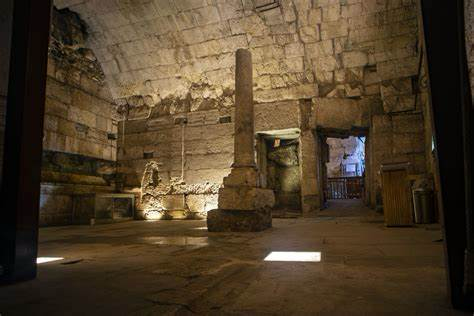
Archeologists fully excavated a magnificent public building which  dates back 2,000 years, during the time of Jesus. A photo is attached that shows the ancient building that was dedicated to the shops where lambs, turtle doves and all things related to temple offerings, were once sold. 

In 2021 this site was open to tourists after being fully excavated. I heard someone who visited this site, share his story, about his Jewish tour guide who told him, “If you are a Christian, you will want to remove your shoes because this is holy ground for you, since your Messiah was brought here 2,000 years ago.”

The building is situated next to the famous western wall, the remains of the great temple in Jerusalem. Archeologists believe that these shops were where Joseph and Mary bought a pair of turtle doves, for the presentation of Jesus in the temple, when He turned forty days old. 

Scripture describes the custom:

“When the days were completed for their purification according to the law of Moses, they took him up to Jerusalem to present him to the Lord. Every male that opens the womb shall be consecrated to the Lord,

and to offer the sacrifice of a pair of turtledoves.” (Luke 2:22-24)

Mosaic law declares every firstborn male to be brought to the temple on their 40th day of life, where the parents symbolically “buy back” their consecrated son with the offering of either a one year old unblemished lamb, or two turtle doves, depending on what the family could afford.  (Leviticus 12:8) 

Mary and Joseph were too poor to afford a lamb to sacrifice, so instead, they offered a pair of turtledoves, purchased at the shop in the attached photo. They didn’t fully understand yet, that their poverty would make many rich, and while having nothing, they possessed everything, within the bundle of humanity held in their arms. 

When the Lord of the universe gave this law of dedication to Moses on a mountain, it thundered with smoke and lightning. That same Lord was later incarnated as Mary’s infant son, who was brought into His own temple, in fulfillment of His own commandments, on His sacred 40th day of human life. 

Forty days has always been a special number of fulfillment and of God’s intervention. It’s a number repeated throughout scripture, since God is very intentional regarding numbers. Noah and his family were saved while the earth was flooded for forty days. Moses spent forty days on Mount Sinai, receiving the commandments in God’s holy presence. Jesus spent forty days fasting and praying in the desert before starting His ministry. 

Today, we enter a forty day period of lent, culminating on resurrection Sunday, where we celebrate the generous offering made by our Father in heaven for us. He bought us back, redeeming us with the precious blood and perfect offering, of Jesus, our unblemished lamb of God. 

As we recall the sacrifice of Jesus, it makes us sorrowful, but it also gives us cause to greatly rejoice. Though He was rich before coming into this world, yet for our sake He became poor, so that by his poverty we might become rich. (2 Corinthians 8:9)

God removes our spiritual poverty and adopts us into the family of God. We have been given the riches of salvation through the life, death, and resurrection of His son. 

Lord, in entering these forty days, we are speechless and in awe, standing on the holy ground of your truth. Thank you for offering your very best for us and making us a part of your family forever. Amen

Lost and found

“What man among you having a hundred sheep and losing one of them would not leave the ninety-nine in the desert and go after the lost one until he finds it?”

”Or what woman having ten coins and losing one would not light a lamp and sweep the house, searching carefully until she finds it?”

”But now we must celebrate and rejoice, because your brother was dead and has come to life again; he was lost and has been found.”

Luke 15:4, 8, 32 (NAB)

The parables of the lost sheep, the lost coin and the lost prodigal son, were all told in the same chapter. The Holy Spirit wanted to impact all readers by guiding Luke, the writer of that gospel, to put all three parables into one section.


Jesus repeatedly speaks about something or someone which was lost, but later found. Scripture is truly inexhaustible. Even though I’ve read these parables many times, I keep finding new meaning each time I read it. As we read each parable, we can imagine ourselves or a loved one in each story. 

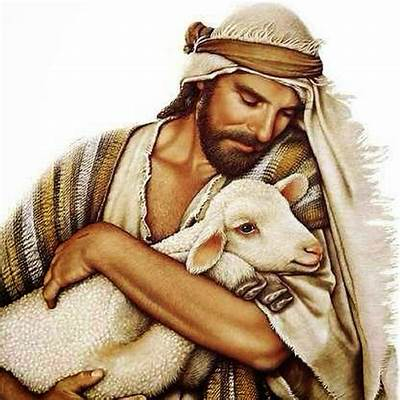
Jesus teaches us through these stories that it only takes losing “one” of something to stir God’s compassion. The good shepherd in the parable, is protective over his entire flock, and yet every individual sheep is precious to him. He instantly left the ninety nine to run after the one lost sheep, and bring it back.

Jesus, the good shepherd, wants us to know how valuable we or our loved ones are to Him. He seeks out every wandering sheep, even if it takes all the days of their life, until they are returned to the flock. Once he finally finds the one who was lost, he sets it on his shoulders with great joy, and celebrates.

Next, Jesus tells us the parable of the woman who searched her home for one lost coin. That lost coin is a Greek drachma, according to the commentaries and had a value of one week’s wage. It was just a coin, but it had great value to the one who owned it, just as each human soul has great value to the Lord God,  who created them.

The last parable is the prodigal son, who estranged himself from his entire family. Although he once scorned and abandoned his father, and squandered his inheritance in careless living, the father still longed to see his son return. The father of the prodigal loved his son more than his own rules, because it was all about a relationship, not rules. 

So it is with God. Jesus reminds us in this parable, that God is our Heavenly Father, who also loves us more than His rules, and wants every son and daughter to return to Him. 

As Jesus told these three parables, He emphasized the intense joy in heaven over that one that is found. It only takes one, to spark a huge celebration in heaven. 


Last week there was a news story about an Ohio school bus that for some unknown reason, suddenly burst into flames. The bus driver evacuated all fifteen middle school students off the bus safely, while that fire raged. Witnesses heard two loud booms as it exploded. 

I happened to catch an early news interview on TV with that bus driver. In that brief interview, he told the reporter that he prays every morning before going to work, and he was thankful to God for helping him to act quickly, and get each child off the bus. 

Many others were also thankful that the driver’s reflexes led him to react as he did in saving those fifteen students, and the city honored him as a hero. He was like the shepherd of that bus, and those students were the sheep in his caring hands. 

Stories like that bring new relevance to the parables of Jesus. As we continue to hear contemporary versions of good shepherds, or someone finding their lost item of value, or a true story of a prodigal son or daughter returning home, we are reminded that God is the Lord of the lost and found.

Jesus revealed His Father’s heart toward all of us, in describing the father of the prodigal, who stood outside, watching and waiting with hope, looking in the distance for that lost son to one day appear. If God so anticipates the celebration over a prodigal’s return, then we should as well. 


Lord, we lift up in prayer and believe for the repentance and return of every prodigal. Help us to follow your example and see the value in every soul, and to keep praying for all to be found. Amen

An added dose of compassion

“To each is given the manifestation of the Spirit for the common good.

To one is given through the Spirit the utterance of wisdom, and to another the utterance of knowledge according to the same Spirit, to another faith by the same Spirit, to another gifts of healing by the one Spirit.”  

1 Corinthians 12:7-9 (RSV)

Paul lists many amazing gifts given by the Holy Spirit, in his letter to the Corinthians. After mentioning each of those gifts in the 12th chapter, he begins the first sentence in chapter 13, by saying, even if we possess all of these gifts, but do not have love, we are nothing

It’s sobering to realize that love and compassion can override all the gifts of the Spirit, which include wisdom, knowledge, faith, healing, miracles, prophecy, discernment of spirits, speaking in tongues and interpretation of tongues.

In the 12th chapter, we learn that the spiritual gifts are distributed by the Holy Spirit, to each individual person as He desires. So the gifts of the Spirit are just that-Gifts, given to us according to God’s will.

The gifts are given according to the His choice, but love and compassion are choices we make. The love of God and love of our neighbor, are the two greatest commandments, given to us directly from the mouth of Jesus. He expects us to choose to obey and pursue those two greatest commandments. He doesn’t zap us and instantly turn us into loving, compassionate human beings, but rather it’s something we are meant to pursue and seek after. 

Wisdom, like any other gift of the Spirit, seems to work better when combined with compassion. A gift of wisdom without compassion, comes across as self-righteous or heartless, while compassion without wisdom becomes foolish and naive. To have one without the other can leave a person spiritually undeveloped and immature. The Spirit gives us gifts, but we are expected to abide in the commandments to love, and to add compassion to those gifts. There is no doubt that we would have a much better world if a dose of compassion was added to every gift.

Adding compassion to wisdom transforms the ordinary into the extraordinary. We were all created in God’s image, and born to imitate our Father, in Heaven. His Spirit has given us many gifts, but to follow Jesus’ two greatest commandments, and abide in Him, is something we must choose. Jesus made it clear that we are judged not by how much we know, but by how much we love.

When I find myself struggling to have compassion, the epistle of James encourages me, since he tells us that if we lack something, it might be because we have not asked for it. He tells us to pray and ask God for what we are lacking.  (James 4:2)

Jesus intended for us to combine  compassion with wisdom, saying “Behold, I send you out as sheep in the midst of wolves; so be wise as serpents and innocent as doves.”   (Matthew 10:16)  

He wants us to be wise as a shrewd serpent, but have the compassion of a gentle dove. It seems like a dichotomy to be both, but it’s God’s prescription, which is possible only by the power of His Spirit who dwells in us.

Wisdom is a valuable gift when a dose of compassion is added to it.

It gives us understanding and changes our perspective in how we see problems and people. I always used to pray for wisdom, but I realize how much I need compassion with that wisdom. We only need to look at the anger and division in the present world, to know that we desperately need both. 

When wisdom is partnered with compassion, it enables us to see beyond our differing ideologies or opinions, and to see people from the heart. It leads us to seek what unites us rather than what divides us, and is a pathway to peace. The Spirit’s wisdom diffuses anger in the heart, before it manifests into harsh words. Compassion helps us to speak to one another with healing words. When we combine compassion with wisdom, it changes lives, and changed lives can change the world.

Lord, help us to choose compassion and love to be added to our wisdom, that we might show mercy before we judge, and seek the love that sees others from your perspective, instead of our own. Amen

How we see the crowd

“When he disembarked and saw the vast crowd, his heart was moved with pity for them, for they were like sheep without a shepherd; and he began to teach them many things.”

Mark 6:34 (NAB)

A vast crowd was waiting for Jesus, and scripture tells us that He was moved emotionally as He saw them all as sheep without a shepherd. 

Jesus sees every individual as a potential addition to His flock. He feels pity for them, and sees the value of each soul in the crowd. 

There is a crowd in everyone’s life as well. Our own crowd is filled with people that we know and encounter each day. Every person that we rub shoulders with, whether an acquaintance, a neighbor, coworker, friend or relative, are in our lives for a reason, and not by chance. 

My take away message from this story, is that Jesus left us His example to follow, regarding the crowd that He brought into our lives. He might be asking us to take notice of someone in particular. 

That person might be someone who naturally stirs our sense of pity, as we feel instant compassion for them. Others may rub us the wrong way, making it difficult to be around them, whether it’s a coworker, a neighbor, friend, or a relative. Jesus looked at the crowd and felt pity, seeing them as sheep without a shepherd. He “saw” them as misguided sheep, and He pitied them. There is only one way to see the people in our crowd, and that is through the eyes of Jesus, which can only happen by the power of the Holy Spirit.

One of the biggest challenges to having a peaceful walk of faith, involves our relationships with other people. 

I remember many years ago, a young woman was hired in the hospital department that I worked in. She had the same responsibilities of taking call as the rest of us. When we were on call, we usually stayed close to the workplace, avoided drinking alcohol and were attentive to any pages that came in through our pagers, during those call hours.

This young new coworker, who was on call one evening, called me to say that she just got paged, but was on a River boat Casino, and already had a few drinks. She asked me if I could take her call for her and go into the hospital. I asked if she knew that she was on call, when she headed to that river boat, and she said she did. After getting past the initial shock of her brazen irresponsibility of partying on a River boat Casino, I did go in to the hospital for her that evening.

I never told the supervisor on her, but for months, I allowed myself to become very irritated by the many ignorant things she did. Feeling guilty for my negative attitude towards her, and in my frustration, I decided to regularly pray and ask God to let me see her through His eyes. Something amazing started to happen.

My whole attitude changed and instead of being filled with critical thoughts or annoyed by her immaturity, I began to develop a strange new maternal compassion and patience for her. Instead of avoiding her, I found myself taking her under my wing and mentoring her. She still had a lot of immaturity to grow out of, but my attitude toward her had changed so drastically, that I knew it was God, who was answering my prayer, by changing me.

We can always pray for people to change for the better, but it’s amazing to see how God changes us when we ask Him to help us see people through His eyes. Something supernatural takes place, when we see people from His perspective. She did eventually mature and do her job more responsibly, but my greatest lesson was in how God changed me. 

The scripture today tells us how Jesus saw the crowd and felt pity for them, as sheep who needed a shepherd. I guess my coworker needed a little extra shepherding. Maybe that’s why we need to pray that we see people through His eyes. I often forget to pray this way, but by recalling this particular experience, this message is a reminder to myself. 

Praying and asking God to help us see others as He sees them, changes us, which in turn, changes everything.

Lord, thank you for the crowd you providentially brought into our lives. We ask that you help us to see others through your eyes, so that we can become more like you. Amen

Under renovation

“Do you not know that you are the temple of God, and that the Spirit of God dwells in you?”

1 Corinthians 3:16 (NAB)

On Pentecost, the Spirit of God filled every temple of the believers in the upper room, for a perfect purpose and mission. Afterward, they left that room and began a new journey of renovation, empowered and transformed by the Holy Spirit. 

It didn’t end on the day of Pentecost, but rather became an ongoing renovation project within every baptized believer in the generations to follow. Renovation requires tearing down the old and “making all things new,” as expressed by Jesus from His throne.  (Revelation 21:5)

It’s all for the purpose of pleasing Him, who dwells within our temples. Each of us are temples of His Holy Spirit, under constant renovation.

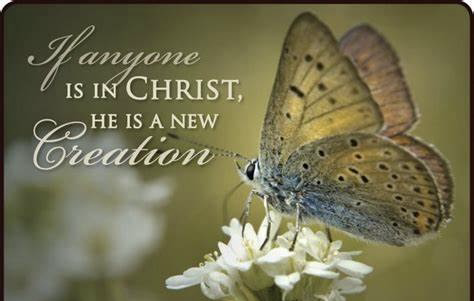
Every uncomfortable event in our life is a part of the tearing down phase of our temple renovation. The chief designer of the project is Jesus. By allowing Him to remove old attitudes or habits, we become new creations in Christ, with a temple that is pleasing for His Spirit to dwell in. 

We wouldn’t argue that our old deteriorating kitchen cabinets with broken drawers or loose hinges are not so bad. No one paints over deteriorated wood or lays worn out carpeting inside of a newly built home. Renovation means a clean, new beginning for the purpose of creating something better, and Jesus never stops making us better.

As our interior designer, we may not see or understand all of His plans in the moment, but we can trust in His expertise. He is coordinating and implementing the changes, as we give Him control. He gives us free will, never forcing His plans upon us. His Spirit, dwelling in our temples, works within every circumstance that occurs in our lives, helping us to adapt, by renewing and reshaping us in love. 

We want Jesus to feel comfortable dwelling in our temples, so we give Him the seat of honor and talk with Him every day. Being the chief designer of our renovation project, He would love to keep meeting with us daily, to discuss the next design plan. If we think back to a painful period in our lives and compare it to who we are today, we will find that there was a subtle spiritual growth that took place over time. 

Sometimes, the greatest battle is within our minds when faced with tragic or frightening circumstances. The Holy Spirit dwells in us to help us choose what we allow to take root in our thought life. We are reminded to take every thought captive, testing it to see if it measures up to God’s truth or not. (2 Corinthians 10:5)

The Spirit helps us take every lying thought captive, including thoughts of hopelessness, or the lie that we are being punished by God. He redirects our thought life to the truth that God loves us and is working all things together for our good. 

During the most difficult periods, we cannot see what good is coming to us or to our loved ones in the moment, but we can still take the negative thoughts captive by saying, “Jesus, I trust that you are in control.”

We may not always understand what the design plan is, but we can trust that He loves us and promises to keep us in perfect peace, during our transformation. The final reveal will be beautiful from the inside out, as Jesus is the honored guest during the entire renovation. He doesn’t wait until it’s finished and perfect, but promises to be with us during every stage of renovation throughout our lives. 

Lord, while you dwell in our temple, you are the chief designer of our  spiritual renovation. Give us the grace and faith to accept that your design plans are best for us. Amen

Unveiled and intimate

“But whenever anyone turns to the Lord, the veil is taken away. Now the Lord is the Spirit, and where the Spirit of the Lord is, there is freedom.”

2 Corinthians 3:16-17 (NIV)

We all tend to move closer or drift farther from God, depending on what we are experiencing in our lives, but whether in good or bad times, God still desires our intimacy with Him. 

A close relationship with Jesus was not supposed to be based upon our circumstances. It’s more like a marriage vow, for better or for worse. Intimacy with the Lord is something we choose by cooperating with His grace. God opens our hearts, but we always have the choice of how open we want our heart to be. 

Faith in God begins with head knowledge, but through time and experiences, it makes its way to that strong, solid place within our hearts.  I may know in my mind that God can do what I ask of Him, but sometimes it’s difficult to transfer that to my heart. Someone once said that the longest journey is from our head to our heart. 

Once faith reaches our heart, there is a personal element that comes alive, which the Old Testament prophets often wrote about. Ezekiel told us that God wants to remove our heart of stone and replace it with a heart of flesh.  (Ezekiel 36:26) 

Some days are more difficult than others, and I find myself saying, “Lord, take away my stoney heart.”

Jeremiah also spoke about circumcising the heart, instead of the flesh. (Jeremiah 4:4)

Let’s face it-God is always after our heart, and He’s not going to stop until He can renew our hearts into the image of His son’s. He is always circumcising or cutting away the nonproductive attitudes within us, and He will be purifying us, for as long as we live. It’s a good reason not to cast judgement on others, since God isn’t finished with any of us yet. 

The first commandment is the driving force for everything, since Jesus told us, “to love the Lord our God with all our heart, soul, mind and strength.”(Matthew 12:30)

God loves us more than we could ever comprehend. He loves us even when we don’t return that love to Him. Even when we drift away from Him, His mercy is showered upon us, in new ways every morning, not because we deserve it, but because His love surpasses what we deserve. 

It makes one wonder why then, is it so easy for people to drift away from the One who loves them the most. 

I know from my own experience, it could be that we just get so busy doing “things”.  Even when we are doing all the right things, working, helping, giving, serving, or attending church, we can still drift away from intimacy with Jesus. Despite that, He pursues each of us through any means possible, until we return to Him and remove our veil. 

No lover wants to feel unnoticed or ignored by the one they love, and neither does God. He is on a quest to capture our whole heart, our whole soul, our whole mind and all of our strength. God is in a passionate pursuit to see us, beyond our veil. Once we realize how much He loves us, it leads us into total surrender. 

A favorite simple prayer of mine is “Lord, fill me with more of you,” because more of Him means less of me, and that’s the best formula for removing any veils.

Someone once said that the word intimacy means “into me, see”. It’s a clever play on the word, which also defines the word. It means letting Him see into our hidden pain, doubt, anger and fear. Intimacy with God is allowing Him to “see into us”, beyond our veil.

Scripture shows us that we may  unknowingly allow a veil to come between us, but the One who loves us the most, will go to any lengths, until we remove that veil and let Him in, which is why He sent Jesus, as the bridegroom of the church.

The reference to a veil reminds us of a traditional wedding ceremony, where the veil remains over the bride until the couple is pronounced husband and wife. Her veil is removed only when they officially become one. Jesus calls His church, His bride. It’s a church spread across the entire world, made up of believers from many denominations, and yet we are all His bride. We were meant to remove our veils and become one with our bridegroom, Jesus.

We may wonder why God is allowing some difficult things to happen in our lives, but His aim is never to cause us pain or to shame us, but to keep us from drifting away, and to revive and purify our love for Him. He searches our innermost being, not to judge or punish us, but to draw us closer and preserve a sacred intimacy with His bride.

Lord, thank you for loving us so passionately. As you “see into us,” fill us with more of you and less of ourselves. Remove our veils and draw us closer to you. Amen

Courageous women

“The king of Egypt said to the Hebrew midwives, whose names were Shiphrah and Puah, “When you are helping the Hebrew women during childbirth on the delivery stool, if you see that the baby is a boy, kill him; but if it is a girl, let her live. The midwives, however, feared God and did not do what the king of Egypt had told them to do; they let the boys live.”

Exodus 1:15-17 (NIV)

This story tells us the actual names of the two midwives who followed their conscience and refused to kill the male babies born to those living under the oppression of slavery. 

The Hebrew slaves at the time were multiplying rapidly and Pharaoh wanted to keep their numbers under control, by killing the male infants. Shiphrah and Puah pretended to obey Pharaoh’s orders, but secretly defied his ruling and let all the male babies live. Pharaoh would have had the midwives killed if he knew they intentionally protected those babies. 

The two midwives revered God more than the King and in saving the baby boys, they saved their own future deliverer-Moses, who was not killed, but later placed in a basket on the Nile River, by his mother, trusting God to protect him. 

The rest of that story is history, or to Jews better known as the Passover story. Even though most people know the Passover story from the movie, The Ten Commandments, not much emphasis is ever made on what Shiphrah and Puah did for that generation. If it were not for the courage of two midwives, and the mother of Moses, the Israelites would not have been delivered from slavery.

There were many other courageous women in history after them, one being Joan of Arc, a seventeen year old girl, who earnestly prayed for her country, when it was under England’s dominance. In her prayers, she asked God to send “a Moses” to deliver France. God told Joan that He was sending her. She boosted the morale of the French army and they eventually won their independence.

Rosa Parks was a civil rights icon, who refused to sit in the “colored”section of a bus in 1955. One year later, the courts deemed bus segregation unconstitutional. Her courage and boldness, set a civil rights movement into action. 

God doesn’t hesitate in raising up courageous women to accomplish feats that change lives and history. 

I just learned a true story about a woman who was used by God during one of the darkest times in history. 

Irena Sendler was a polish gentile who worked as a nurse and social worker, employed by the Warsaw department of public health during  Nazi occupation. She and some of her female coworkers secretly worked with an underground group to help save Jewish children living in the Warsaw ghetto.

Irena was bold enough to go into the Warsaw ghetto, pretending to be there on official business of her profession, and then leave, carrying a Jewish baby either inside her suitcase, in a casket or inside of a potato sack. She had a dog in her car who was trained to bark nonstop, each time she drove away, so that no one could hear a baby crying. 

Every child she saved was placed into a foster home, until they were eventually adopted, since most of their parents were later killed by the Nazis. I wonder how many times, Irena found it unsafe to remove a child, yet she returned to try again another day, driven by courage and compassion to save the young and innocent among the Warsaw ghetto.

Irena kept a list of all the names and destinations of each child she rescued. She placed the list in a jar and buried it in her yard. In 1943 the Gestapo started to discover what Irena was up to, and though she was beaten, she never disclosed a single name or the whereabouts of any children that she saved. Her list remained safely buried in the ground until after the war. She saved the lives of 2,500 children who were adopted into caring families.

She was sentenced to death until Zegota, the underground polish resistance organization, bribed the Nazi officials to set her free. Irena was freed and after recovering from broken bones and many beatings, she lived to the ripe age of 98. She was nominated in 2008 for a Nobel peace prize, and though she was denied, she is honored to this day in Israel, at Yad Vashem, a memorial dedicated to gentiles who saved lives during the Holocaust.

Most people probably never heard of Irena Sendler, or of those biblical midwives, Shiphrah and Puah, but all were women who put themselves at risk, while standing against the mainstream, to save innocent lives. 

They were all women with faith, compassion and courage, who defied the cruel and unjust laws of their day. Their names may not be well known, but their compassionate deeds were known by every life they saved. They may not have received the rewards that this world offers, but their rewards are plentiful in heaven.

Lord, help us to always know first and foremost that our identity is in Christ, and give us the courage and compassion to stand up for the innocent ones in this world, who cannot protect themselves. Amen