Lamenting to God

“Rise up, Lord God, lift up your hand!

Do not forget the poor!

Why should the wicked scorn God,

say in their hearts, “God does not care”?

But you do see;

you take note of misery and sorrow;

you take the matter in hand.

To you the helpless can entrust their cause;

you are the defender of orphans.”

Psalm 10:12-14 (NAB)

This is one of many Psalms of David, that is considered to be a Psalm of lament. The dictionary defines a lament as a passionate expression of grief and sorrow. 

Every believer has at some time poured out their heart in a lament to God. 

I was listening to a Christian podcast recently, and heard a better definition for lament:

To lament is to give all your negative emotions to God. That’s it, so simple, yet so cleansing, deep and meaningful. We don’t need to clean ourselves up before approaching God, we come to Him as we are, and our honest lament brings us peace and renewal.  In reading this Psalm, we see that David’s lament was an outpouring of all his frustrations, or in other words, just giving it all to God. 

Jesus never said “Come to me all you good and perfect people,” He didn’t come to call the righteous ones, but sinners. (Luke 5:32)

Lamenting is pouring our heart out to God, by gathering all of our sorrow, anger and our frustrations, in an honest lament. He hears us and leads us into His rest. Jesus specifically called the weary and heavily burdened to come to Him, and lamenting is a good way to respond. The Psalmist lamented and found his peace and rest in the Lord.

Many people avoid going to church because they think they aren’t good enough, as if church is a meeting place only for the righteous. Jesus would say that the church should be a hospital for the wounded. In the psalm of today’s scripture, God is the One who sees and takes note of all the misery and sorrow in the world. The helpless and the orphans can put their trust in Him. The people who are suffering most in this world have already learned this. 

I recently heard the testimony of a man who lived under the tyranny of Iran’s government for decades. He has lost friends and relatives, who were among the 36,000 civilians killed by government controlled security forces to date. 

He managed to escape the country and is finally living free, but through his new found faith in Jesus, he has started a digital outreach ministry to bring the gospel message to his people in Iran. When asked how he balances his passion for Christ with his passion to support the resistance there, he said that he prays Psalm 10 every single day. 

In hearing this, I had to look up Psalm 10 and read what he was referring to. It’s a lament to God on behalf of the suffering of the poor, the orphans and all the innocents in the world. He laments daily on behalf of his own people, and there are signs that God is listening.

He started a digital ministry which is now reaching about 25,000 Iranians each month through online church services, prayer rooms, Bible studies and more. Despite harsh persecution, or because of it, churches in Iran are meeting secretly in homes and thriving. No one would know it, but Christianity is growing faster in Iran than anywhere else in the world. It is estimated that one million or more Iranians have secretly converted to Christianity. 

Other similar ministries are doing the same, by bringing the love of Christ to Iran, Afghanistan, Africa and beyond through digital and underground ministries. Secret churches are thriving in China as well. It’s like the book of Acts, all over again, as the fruit of these ministries are producing people who are passionately devoted to Jesus, despite knowing it could cost them imprisonment or their lives. 

The Lord hears the cry of the poor as the psalmist said. He sees the suffering of people everywhere. Although we don’t visibly see how God is answering their cries, He is doing it. There is a beautiful work in progress among the souls who bring their honest lament to God.

Lord, we pray for the conversion of souls everywhere in the world, so that your transforming love and peace will sweep over all nations to save, heal, protect and free all who suffer. Amen

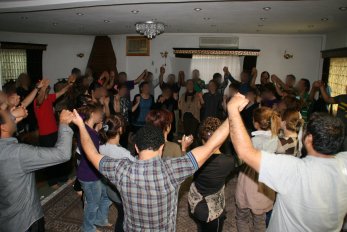
Church meetings in homes of Iran

Reading the season

“For everything there is a season, and a time for every matter under heaven:

a time to weep, and a time to laugh;

a time to mourn, and a time to dance;”

Ecclesiastes 3:1, 4 (RSV)

Those of us in a particular age group will remember these words from the hit song by the Byrds in 1965. The words were derived from eight verses in this chapter of Ecclesiastes. King Solomon wrote the lyrics and Pete Seeger was the first to turn it into a song in 1959. The Byrds later adapted it and it became the popular hit song, called  “Turn, Turn, Turn.”

People read the seasons, signs and cycles of nature in order to adjust and plan accordingly. Professional golfers know how to read the greens of each golf course. Fighter pilots use OODA, a code which stands for Observe, Orient, Decide and Act. It helps them make quick, accurate decisions while flying at high speeds. 

Farmers read the phases of the moon, since some are better for planting, when the gravitational pull is best for plant growth and root development. Physicians observe a patients’ symptoms to decide which diagnostic tests to order and how to best treat them. 

God created a beautiful world with cycles and systems of nature, which mankind has learned to navigate according to their own field of interest. He has made everything beautiful in its time, and He created us to hunger for the pleasures that last forever, which only He can satisfy. 

Just as there are cycles and seasons in the universe, there are also cycles and seasons in our personal journey of life and faith. We all experience seasons of joy and laughter, as well as seasons of mourning and weeping. If we can read the seasons in our lives, as we do in nature, we will have a better sense of divine providence, and the security of trusting that God works everything out for our eternal good.

True joy has little to do with the absence of problems, but is the result of a grateful heart. Trusting that God is in control, gives us a sense of gratitude and makes it easier to transition into the next season. Nothing stays the same, change is always difficult, but the biggest challenge is when we are in a season of sorrow, loss or discomfort.

Peter tells us not to be surprised by the fiery ordeal that we may be facing, because we will share in Christ’s suffering in some way, but we will also find inexpressible joy at His return and revelation of His glory. (1 Peter 4:12-14) 

We were meant to seek the lessons God has for us through all the seasons of our lives. 

My two older brothers were only eighteen months apart and were very close growing up. As the only girl and the youngest, I felt like an only child at times. Now, when I reflect on their relationship, I can appreciate it much more after raising twin boys, who grew up with the same kind of closeness. 

My brothers shared a bedroom as well as the same group of friends. They laughed together, played sports together, shared their first car, attended the same college and had the same best friend, who stood up at both of their weddings. They both had a first born baby daughter, born within two months of each other.

Three years after his daughter was born, my oldest brother Ted, died suddenly at the age of 35, in his F-16 fighter jet. He was a skilled Air Force instructor pilot, but crashed during a routine training mission, caused by an electrical wire chafing problem, common in F-16’s at the time.

(A movie called Afterburn, released in 1992 tells his story)

The loss of my oldest brother was a sad season in my family’s lives. Although my brother John kept a stoic exterior, I have come to understand that he suffered the loss in a different way than the rest of our family.  He not only lost a brother, he lost his best friend, the one person who knew him best and was supposed to be his lifelong friend. Today, he has a family of his own and a close relationship with his own son and grandsons, which has been a gift of comfort and blessing for him. 

In thinking about faith, families, siblings and the seasons of our lives, I have come to realize that Jesus is an older brother to all of us, who stays with us throughout every season of our life. We can have peace, knowing that His arms are always around us, in whatever season we are in. 

Life is filled with seasons of joy and sorrow, but if we learn to read the change of seasons, we can trust that God is always with us, using every season to transform and strengthen us, while working all things for our good.

Lord, help us to read each season and cycle of our lives, and give us the grace and peace to know you are with us in every season. Amen

The Spirit and the bride say come

“And if I go and prepare a place for you, I will come back and take you to be with me that you also may be where I am.”

John 14:3 (NIV)

In order to better understand the metaphor of the church as the bride of Jesus Christ, we would need to time travel back to the customs of marriage in His day.

Every marriage during Jesus’ time and culture began with the father of the groom, who sent his servant, the Negotiator, to work out the marriage arrangement. A generous price was paid to the bride’s family and a binding contract was signed. The servant then returned to the master’s house, and the son excitedly began to prepare his bridal chamber. It could take up to a year for the groom to construct and prepare the place for him and his bride to reside.

Through that same negotiating servant, the groom sends his betrothed bride an engagement gift of gold jewelry. The engaged bride wears her gifts of betrothal, while residing in her current home, until her wedding day. She had to be ready at any moment, because the day and time of the groom’s arrival was unknown, but would be announced with a trumpet call and a shout.  

When I learned about these traditions, it brought new meaning to the words of Jesus, promising that He is going to prepare a place for us. 

The church is His bride and His Father paid the highest possible cost for us, with the divine and precious blood of Jesus. That’s the binding marriage contract. His resurrected Son is still being  betrothed to whoever accepts His proposal today, and then He goes to prepare a place for them, in His Father’s mansion. 

Instead of gold jewelry, He adorns us with all the engagement gifts of His Holy Spirit, who distributes them to us as He chooses. We wear and use these gifts of the Spirit, while we wait for the bridegroom’s return. 

We are still residing in our current home, but we are being prepared to live in a better and eternal one. Everything that happens in our lives has been a preparation for the goal of this promised union.

The date is unknown, and will be a surprise, announced by an angel’s trumpet call and a shout from Heaven. We are His betrothed bride, and Jesus is preparing His Heavenly wedding chamber for us.  

We will learn one day how our whole life has been a time of preparation, and how every event seemingly good or bad, has served a divine purpose to transform us to become more like the Son, who is our Bridegroom. 

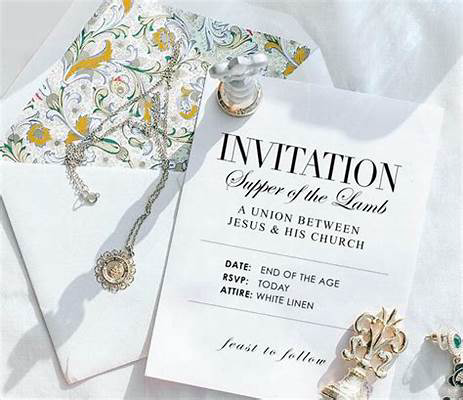
Like an engaged bride we anticipate the day of His coming, and the marriage supper of the Lamb will be the greatest wedding banquet of all time. On that day we will meet the One who has loved us with an everlasting love and gave Himself up for us. 

Until the bridegroom arrives, we hold within us all the grace and strength we need to do whatever we were born to do. We cannot add time to our lives, but we can always add quality to the time we have left, until we meet Him in the air. (1 Thessalonians 4:17)

In the last chapter of the book of Revelation, it reads, “The Spirit and the bride say, “Come!” And let the one who hears say, “Come!” Let the one who is thirsty come; and let the one who wishes, take the free gift of the water of life.” 

(Revelation 22:17) Today is the day and now is the time to receive His free gift of living water. 

Jesus is telling each of us, “Yes, I am coming soon,” and our RSVP reply is “Amen! Come, Lord Jesus”.

Sharing His lavished love

“See what great love the Father has lavished on us, that we should be called children of God.”

1 John 3:1 (NIV)

If anyone in scripture had an intimate relationship with the Lord, it was David. He was an imperfect and flawed human being, yet he always found his way back to God’s arms of mercy. He is the best example, that we do not need to be perfect to have an intimate relationship with God. We only need to keep returning to His throne of grace, forgiveness and His arms of mercy. 

In the NIV version of the epistle of John, the word “lavished” is used. John and David both knew all about being lavished by God’s love. David wrote in his psalm, calling Him, “my God”and declared His love to be 

“better than life.”  (Psalm 63:3)

Whatever sickness, grief, or stress that we are faced with, we always have the option to restore ourselves to God’s love that has been lavished on us.  Everyone needs reminding of that kind of love, which stands apart from any other.

There is a type of security that comes from friendship with Jesus, which leads us to enjoy seeing others being blessed by Him. A personal relationship with Jesus is more than knowing about Him, or believing in a mysterious divine being. Since we know Him, we want others to know Him as well. I once had a childhood experience that illustrated this for me.

My mother went to work full time when I was about eight years old, since my father was disabled from a stroke a month before I was born. She was a seamstress, who joined the garment workers union and started working in an upscale dress shop, about two miles from our home. Each day, she took a city bus from the corner of our block, to and from work. I used to meet her when she came home, as she got off the bus.

I had a childhood friend named Mary Margaret, who was a few years younger than me, and lived a few doors away. We would play together outside, but the moment my mother came off that city bus, Mary Margaret stopped playing and excitedly ran to greet my mother with a big hug, before I ever reached her. 

The first time she did this, I was perplexed and wondered why she was so excited to see my mother, since she had a mother and father of her own. I eventually realized that my mother was the kind of person who showed a lot of love to others, and for some reason, she became the highlight of the day for Mary Margaret, who couldn’t wait to run into her arms. 

I was secure in knowing that my mother loved me, so I grew accustomed to Mary Margaret outrunning me to receive my mother’s daily hug. Instead of thinking she was taking over my mom, I felt pride in having the kind of mother who was so special to her as well.

That childhood experience helped me to later understand and adapt to the idea of intimacy with God, through a friendship with Jesus. When we have a personal and intimate relationship with Him, we naturally rejoice when others do as well, even when they outrun us.

I was secure in the love of my mom and later became secure in the love of my God, just as David was. When we are secure in His lavished love for us, friendship with Jesus is like an anchor that keeps us grounded in all the areas of faith and friendship.

David knew that God’s love is better than life, which is why it’s so worthy to be shared.

Lord, help us to know that we are your beloved ones and anchor our faith as you lavish us in your love, throughout our lives. Amen 

The gift of encouragement

“Having gifts that differ according to the grace given to us, let us use them: if prophecy, in proportion to our faith; if service, in our serving; he who teaches, in his teaching; he who exhorts(encourages),

in his exhortation; he who contributes, in liberality; he who gives aid, with zeal; he who does acts of mercy, with cheerfulness.”

Romans 12:6-8 (RSV)

In the scripture today, the apostle Paul lists many gifts of the Spirit. A gift of the Spirit, also called a charism, is an ability or service bestowed by the Holy Spirit, to edify others. Paul is telling the church to discover the charisms or gifts that we’ve been given, because gifts are meant to be used. This meditation will focus on one of the spiritual gifts, which is exhortation, meaning to strongly encourage others.

Everyone has a unique, possibly quirky, yet loveable quality that adds something vital to the body of Christ. It requires the gift of encouragement to be able to identify those good qualities in others, and then encourage them to use their gifts. Some who are reading this have the gift of encouragement, or may know someone who has it. We have all been encouraged at some time by someone with spiritual insight, who inspired us at a key moment on our faith journey.

Offering encouragement to others might be the most valuable of all spiritual gifts. What good are gifts of prophecy, service, almsgiving,  teaching or showing mercy, if a person is not “encouraged” to use those gifts? 

Encouragement was given by the apostle Paul all throughout his ministry, to inspire the early church and those he personally mentored, like Timothy and Titus. He encouraged others to use their charisms and grow in faith to serve God and His church.

The gift of encouragement was once used by Paul in a most unusual way. He was one among 276 men on board a ship during a severe storm. The sailors were about to abandon ship and use the lifeboats, but Paul urged them to stay put, guaranteeing that all the men would survive the shipwreck. The ship was totally destroyed in the storm, but all 276  men on board, made it safely to the island of Malta. 

(Acts 27:29-31)

According to Paul, his guardian angel told him that all the men on board will survive if they stayed on the ship. Paul’s encouragement did more than save 276 lives, but  opened their eyes to the one true God and faith in Jesus. 

At the Boston marathon this week, a first time runner collapsed four times when his legs became too weak to finish the race, until two other runners came along side him and held him up, all the way to the finish line. What are the chances that two total strangers would sacrifice their own win by helping another stranger who collapsed? The two strangers gave the weary man a gift of encouragement and those three men found a new friendship together. God calls us to stay on the ship, encourage the weary and finish the race together. 

Encouragement is a light that brightens not just one heart, but inspires and unites others in the world who witness it.

Lord, help us to discover and use our spiritual gifts but especially to be the light of encouragement to all those who are weary among us. Amen 

The gift of music

“My heart, O God, is steadfast;

I will sing and make music with all my soul.”

Psalm 108:1 (NIV)

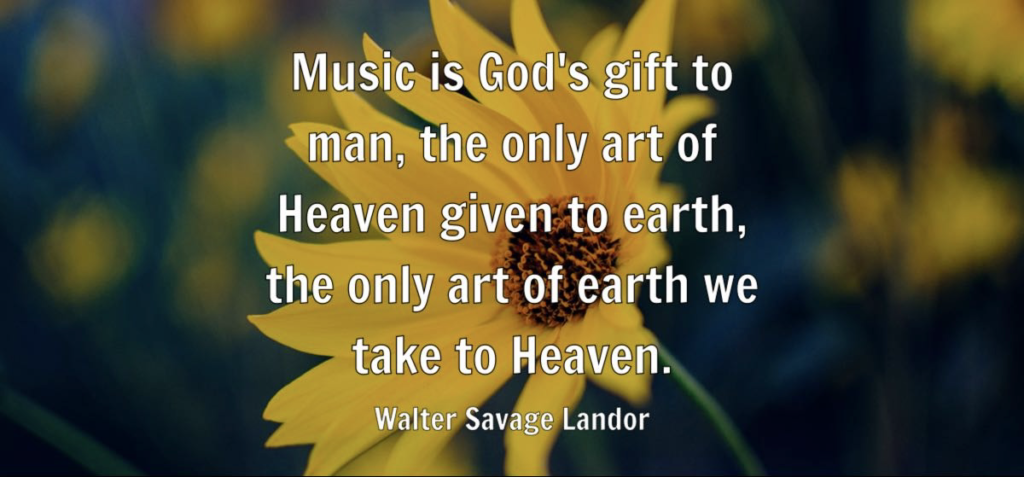
The interesting thing about music is that when it is sung, played, or composed from the soul, it speaks to other souls in ways that human vocabulary cannot. That makes every genre of music “soul music”.

Music is a gift that God gave to all of us, as He blessed certain people with the ability to play instruments or sing, or use their talent to write the poetic lyrics of songs. God gave a great gift to those who can create melodies and compose music.

Those of us who cannot sing, write, play, or compose, are still blessed by listening to music. Music touches the soul like no other form of communication. Some people share their musical talent by giving of their time to sing in concerts, church choirs or to entertain children or seniors in singalongs at various facilities. Jesus said whatever we do for the least of these, we are doing for Him. 

Music brings joy and comfort to  mankind at all stages of life, such as birthdays, anniversaries, marriages or any milestone of life. The psalms were songs written by David, put to music and played on a harp, for the single purpose of worshipping God, who gave us the gift of music, so that we could give it back to Him and to others. 

Music can comfort a comatose or dying patient. Research reveals that a person who can no longer speak, see or move, can still respond to auditory stimuli, like the sound of their loved one’s voice, or music played at their bedside. We know this because of the Electroencephalogram which shows the patient’s response to sound through their brain waves. 

After doing EEGs during the years that I worked in a hospital, I saw it firsthand. Brain waves always show a change in activity when a loved one spoke to a comatose patient. Knowing that hearing is the last thing to go, and how much I enjoy music, I created my own “Coma playlist,” which I want to have played if I am ever in an unconscious state. People laugh when I tell them about my coma playlist, but I’m glad I selected a list of my favorite music, which  brings me peace.

I recently saw a documentary about a young Jewish songwriter, named Ilse Weber, who was sent to a concentration camp during the holocaust in 1940.  She was permitted to sing her own lullaby compositions to the children in the infirmary part of her camp. 

Even in such a dark period of history, Ilse brought light to others, by singing songs she created from her soul. She sang to the children, comforting them with moments of love and peace, while separated from their families. One day she learned that the children she sang to, were placed on the transport list, to be sent to Auschwitz for immediate extermination. Ilse asked to go with them. 

A Nazi soldier remembered Ilse as he later testified seeing her gather the children around her on the floor of the gas chamber, singing her lullabies to them. This is probably the most heartbreaking Holocaust story I’ve ever heard, but Ilse and the children died to the sound of singing lullabies instead of the sound of panic or screaming. Music is like Heaven’s prayer, that draws a soul into the restful arms of God. May Ilse and those children rest in God’s peace and love forever.

Ilse Weber’s lullabies are now being gathered and played by musicians today, thanks to a woman who wrote her biography. Words of the human vocabulary cannot bring the comfort that music brings, because music is interpreted by the soul.  Plato once said, “music finds its way into the secret places of the soul.” It’s so true, and God placed those secret places in our souls, as He gave us the sacred gift of music. 

Lord, thank you for the gift of music, which soothes and comforts us in suffering and speaks to our soul, drawing us closer to you. Amen

Resting on the Rock

“When Moses’ hands grew tired, they took a stone and put it under him and he sat on it. Aaron and Hur held his hands up—one on one side, one on the other—so that his hands remained steady till sunset. So Joshua overcame the Amalekite army with the sword.”

Exodus 17:12-13 (NIV)

After their exodus from slavery in Egypt, the Israelites had a new enemy to contend with. As Moses and Joshua led them toward the promised land, they were under constant attack by the nomadic tribe of Amalekites. The Israelites were pressured to transform from being a nation of slaves to warriors, in order to survive.  

Joshua was mentored by Moses, but Joshua’s gift was in military skill, while Moses was a Prophet and a Priestly leader, who didn’t fight.  During each battle, Moses stood on top of a hill, holding his staff up in the air, so the people could see it and be inspired. It was the same staff that Moses held over the sea when it miraculously parted. To see Moses hold his staff in the air, inspired the people to trust in God once again.

As long as Moses held his staff up high, the Israelites were winning the battle. When his arms grew tired, he lowered them, and then the Amalekites would gain the advantage. In seeing this trend, Aaron, the brother of Moses and Hur, his close friend, rushed over to stand on each side of him, to hold up Moses’ exhausted arms. 

As his arms were held high, the army could see Moses’ staff and gained confidence.

Finally, Aaron and Hur found a large stone and put it under Moses so he could sit down, while holding his arms up. When his staff was high and visible for all to see, the battle was won, and by sunset, the Israelites could move into their promised land. 

As their goal was to get to the promised land, we are also on a journey toward our promised land, which is Heaven. We go through seasons of blessings and good times, as well as seasons of testing and confrontations with spiritual foes. We have obstacles to work through during our life journey, and just like Moses, we also grow weary.

The prayers of fellow believers uphold us when we are spiritually or emotionally exhausted, just as Aaron and Hur upheld Moses’ arms. Joshua’s army received renewed hope and faith by seeing the staff held high. Moses rested on a rock, and we find our rest in the Rock of our salvation, who is Jesus.

There’s one more lesson to learn  from this image of Aaron and Hur holding up the weary arms of Moses. God wants us to pray for our ministers, priests, and leaders of our faith, since there are forces of darkness and spiritual enemies who target all faith leaders. This story sends a clear message that spiritual battles will be won, when we support the leaders with our faithful service and prayers.

By giving us this story in the bible, God shows us how He delights in the unity and solidarity of His people. When we are weary and weak in our faith, and we pray “Help me in my unbelief”,  it’s the prayers of others that lift and renew our hope, as we find our way back to the “Rock” of our resting place who is Jesus. 

Lord, help us to uphold in prayer and support the arms of all who grow weary, and may we rest in you, keeping our eyes on the cross and empty tomb, the focus of our victory. Amen

Attitude of gratitude

“Finally, brothers and sisters, whatever is true, whatever is honorable, whatever is right, whatever is pure, whatever is lovely, whatever is commendable, if there is any excellence and if anything worthy of praise, think about these things.”

Philippians 4:8 (NASB)

Our capacity to maintain peace and contentment in Christ, depends on how we invest our thoughts. It’s what scripture has always taught, and is now supported by scientific research. 

I’m sure I am not the only one who needs reminding of this principle. 

Investing thoughts is similar to investing money. If we invest our thoughts in negative, stressfull thinking, we will reap anxiety and stress which is damaging to both body and soul. If we invest our thoughts in gratitude, as the heroes and heroines of the bible did, we will reap a spiritual profit in return. 

A mind filled with gratitude can help us sleep better in the storm, pray calmly in a lions’ den, sing praises in a fiery furnace and slay our giants with a single stone. There is a truth found by uniting science and scripture to rewire our brain for the good.

God created our human bodies with chemical messengers that regulate our nervous system.

Serotonin is the neurotransmitter known as the “happy hormone.”It’s the brain chemical that brings us a sense of well being. Research has found that if we intentionally dwell on good times, good people, positive experiences, past and present, we will increase our production of Serotonin, which has a significant impact on mood. 

Cortisol is known as the “stress hormone.” When thoughts are  focused on negative or stressful experiences, it increases the production of Cortisol throughout our bodies. Prolonged exposure to elevated cortisol disrupts sleep patterns, suppresses the immune system, raises blood glucose levels and increases depressive symptoms.

There are medicines that block Cortisol, but we can choose to invest our thoughts on the good and the positive aspects of life, and produce more Serotonin. How we invest our thought life can help to maintain a sense of well being. 

God is the one who wired our bodies this way, but thankfully, science now confirms it. Scripture is “living and active” and pierces through the division of soul and spirit, and judges the thoughts and intentions of the heart. 

(Hebrews 4:12)

If scripture has such an organic living effect on our soul and spirit,  it can surely help us overcome the negativity producing depression. Memorizing scripture has helped many people to stay positive in difficult times. One way to invest in good thoughts, is by reading or memorizing God’s word, which has a living and active effect on us.

One of my favorite verses to recite to myself in troublesome times is,

“I can do all things through Christ, who strengthens me.”

(Philippians 4:13)

Our attitude is so easily affected by how we talk to ourselves. Research indicates that self-talk activates the brain’s reward system, and leads to improved mood and cognitive performance. By allowing the Holy Spirit to police our thoughts, we can speak to ourselves and inspire our faith with an attitude of gratitude. 

Whether we invest our thoughts in memorizing scripture, reading inspiring books, listening to music, or hearing faith inspired stories on Christian TV or radio, we can change our brain chemistry by finding good things to dwell on. 

I recently had a chance to put this into practice.

One brief, negative conversation can drag us down emotionally and leave a knot in the stomach, which happened to me one day. 

I prayed and tried to leave it in God’s hands, which is easier said than done. I felt grieved until later that same day, when I received a phone call from a friend who now lives in California, who was once my dog walker. It was a pleasant surprise to hear from her, and it turned out to be a therapeutic phone call. In some mysterious way, that call was like a healing balm sent from Heaven. I was overwhelmed with gratitude, and realized the knot in my stomach was complete gone afterward.

God knows that He wired us this way, which is why He inspired Nehemiah to say, “The joy of the Lord is our strength.” 

(Nehemiah 8:10)

Paul knew it when he told us to find “anything”worthy of praise or excellence to be thankful for. The brain chemistry of investing our thoughts in gratitude for good things, is as old as the bible itself. God is telling us to think about whatever is right, pure, lovely, commendable, excellent or worthy of praise.

Serotonin flows from happiness, and happiness flows out of gratitude, and gratitude doesn’t depend on having perfect relationships, good health, close families or financial security. It depends on how we manage our thoughts of gratitude.

Gratitude leads to confidence in a perfect God who is our steady anchor in a very unsteady world.

Scripture tells us that our true citizenship is in Heaven, which is an invisible kingdom that cannot be shaken. It’s a kingdom that dwells within us, giving us the resilience to do all things through Christ, who is our source of strength. 

We are unshakable people  because Jesus is unshakable and He lives within us.

Lord, thank you for the science that proves what your word has declared centuries ago. Help us to keep our thought life well invested, that we may dwell in your peace. Amen

Friends in high places

“For where two or three are gathered together in my name, there am I in the midst of them.”

Matthew 18:20 (NAB)

Once in a while, I flip through radio channels, and hear an old song, that I forgot about. One day the old country hit song by Garth Brooks, was playing, called, “Friends in low places”. 

The song speaks of finding refuge in a favorite bar, hanging out with old friends, as the whiskey and beer chases all the blues and heart break away. 

As I listened, I thought of how friends who share our faith are  friends in high places, rather than low places. Based on what Jesus promised us, where two or three gather in His name, He is in the midst, and if He is in our midst, that puts us in very high places.

Every person who believes in Jesus is a brother or a sister, and through Him, we are one family. 

We are many parts but one body, as Paul told the first century church. (1 Corinthians 12:12)

We don’t need to think alike, or share the same opinions. We may have totally different styles of communicating and possess different gifts from one another, but if we worship one God, and share in loving His son, that makes us all friends in high places.

Each time we agree in prayer with other believers, Jesus is there among us, by His Spirit, which means that the most essential part of heaven is in our midst.  

So, our place of refuge is not a tavern, but any place where two or more can agree in prayer. The power is in our prayer, not the place, because Jesus will join us anywhere we go.

Whiskey and beer may chase the blues away temporarily, but only the blood of Jesus and the power of His Spirit can cleanse, renew and bring lasting peace. We could never earn all that is given to us by His grace and promise. Every  Christian friend is a friend in high places, through the power of prayer in Jesus’ name. 

Lord, thank you for friends in high places and the gift of your presence, who is with us everywhere, when we gather by faith in your Name. Amen

Falling on Jesus

“Jesus, knowing all that was going to happen to him, went out and asked them, “Who is it you want?”

“Jesus of Nazareth,” they replied.

“I am He,” Jesus said. 

When Jesus said, “I am He”, they drew back and fell to the ground.”

John 18:4-6 (NIV)

John’s gospel shares this unusual occurrence that preceded Jesus’ arrest. This is probably the most overlooked incident in the gospel during the arrest of Jesus. We get so focused on Judas and his betrayal that we miss out on these awesome details in John’s gospel. 

As the group of armed soldiers, Chief priests and Pharisees asked for Jesus of Nazareth, He answers them, “I am He”, and that group of  men instantly drew back and fell to the ground. How odd it was for the whole group to suddenly fall backward to the ground, when Jesus simply said, “I am He.”

It’s such a curious visual of the earthly powers of authority who gathered in numbers to arrest Jesus, armed with torches and weapons, and as they closed in on Him, those few words spoken knocked them off balance and they fell to the ground. It should have been embarrassing that the mere words of Jesus caused men of authority to have their knees buckle and collapse in His presence. They quickly stood back up but there is a spiritual significance in their falling down. 

The phrase that Jesus spoke to them was a divine phrase, going all the way back to Mount Sinai when God first called Moses to deliver His people from slavery. The phrase “I AM” was spoken before the first Passover lamb was ever slain, at the start of the miraculous Exodus story.

Jesus now spoke the same words with divine authority at the final Passover, knowing He was the Lamb of God, being led to the slaughter, once and for all. In that moment, power flowed from His mouth as it did from the fire of the burning bush on Mount Sinai, centuries earlier.

Jesus connected the old covenant to the new when He uttered the same words, “I AM,” as His divinity thundered into the souls of those men who came to arrest Him. They should have knelt in worship to Him, but instead, their ability to stand in His Presence was taken away for a brief moment.

The same words once filled Moses with reverence for a holy God who spoke to him from a fire. Jesus still says these words to all who believe in Him today. He is holy but describes Himself now as gentle and lowly of heart, asking us to learn from Him. 

(Matthew 11:29)

He brings comfort to our souls by whispering, “I AM here with you.”

We still fall in His presence, but in a different way. He meets us where we’re at, in whatever sorrow, doubt or fear that we may be struggling with. He invites us to let go and fall into His arms. It takes trust to fall into the arms of Jesus, and trust is not an emotion or a feeling, it’s a total surrender.

To fall into the arms of Jesus is to fall into the arms of love. Through all the worries and burdens of life, we may wonder at times if He is really with us and He still answers us by saying, “I AM”.  His words can still make knees buckle and strong men fall, but instead of falling to the ground, He invites us to fall into His loving and merciful arms that will hold us forever. 

Lord, we surrender our burdens to you and willingly fall into your arms, as you strengthen us to reflect your love and mercy to others. Amen